The Ceylon Plates

Stories

The making of Colombo

In a few decades, an open roadstead and a garrison town became one of the great ports of the East.

For much of the nineteenth century, large ships preferred Galle to Colombo, because Colombo had no sheltered harbour. That changed in 1875, when the Prince of Wales laid the foundation stone of the southwest breakwater. When it was completed in 1885 it ran for more than 4,000 feet into the Indian Ocean.
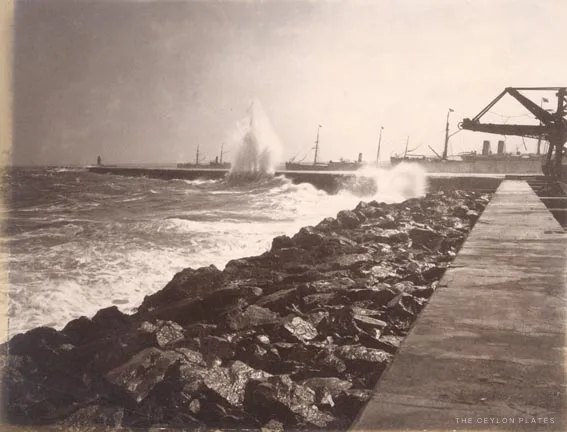
The monsoon sea breaking over the breakwater, with the great Titan crane at work. Photographers came back to this scene again and again.
The monsoon sea breaking over the breakwater, with the great Titan crane at work. Photographers came back to this scene again and again. Details
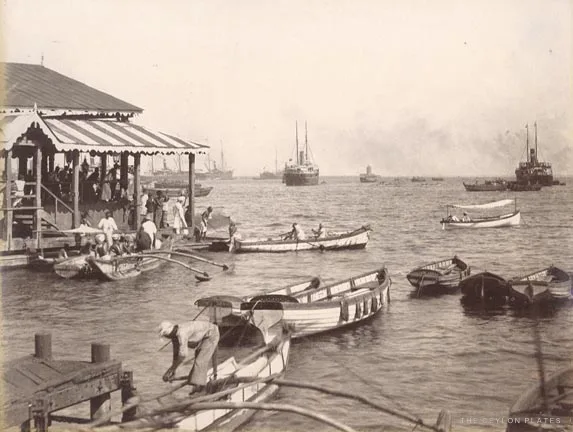
The passenger jetty, where travellers from the mail steamers stepped ashore.
The passenger jetty, where travellers from the mail steamers stepped ashore. Details

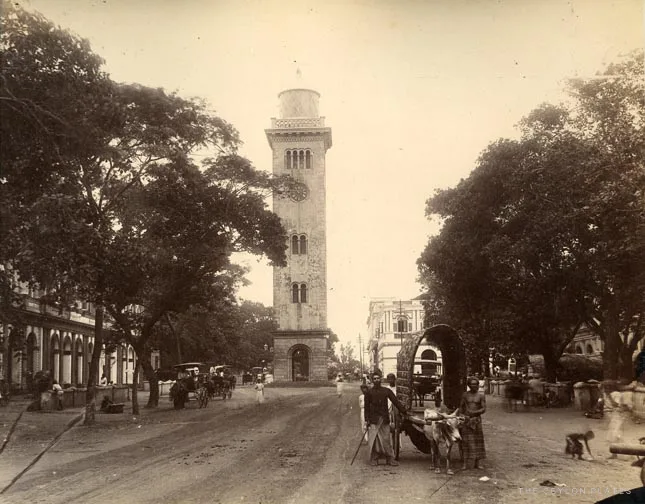
A new city was growing behind the harbour. The Grand Oriental Hotel opened near the landing place on 5 November 1875, and for many visitors it was their first address in Ceylon. The lighthouse clock tower, built in 1857, stood over the Fort’s shaded streets. South of the Fort, the Galle Face Hotel had been receiving guests since 1864. The Colombo Museum followed in 1877.
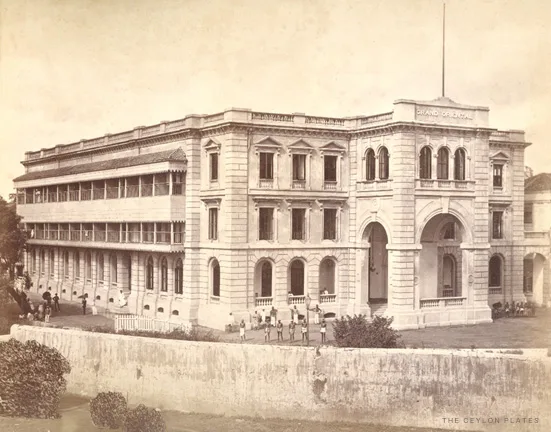
The Grand Oriental Hotel on York Street.
The Grand Oriental Hotel on York Street. Details
The clock tower and lighthouse, looking along Queen Street in the Fort.
The clock tower and lighthouse, looking along Queen Street in the Fort. Details
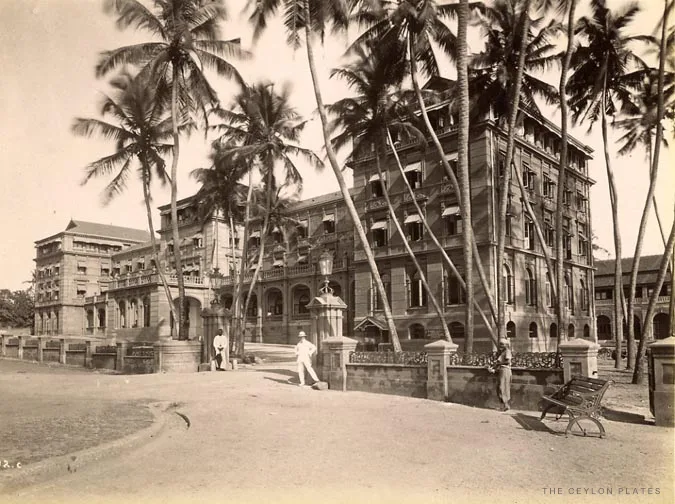
The Galle Face Hotel, with a rickshaw waiting among the palms.
The Galle Face Hotel, with a rickshaw waiting among the palms. Details

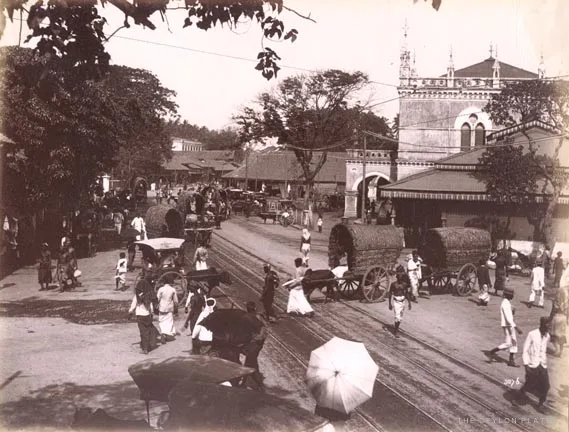
A short walk east of the Fort, the Pettah had a very different energy: bullock carts, rickshaws, temples and crowded shopfronts. Its Old Town Hall was built in 1873. Electric trams began running in Colombo in January 1900, and they appear in these streets as a sign of how quickly the city was changing.
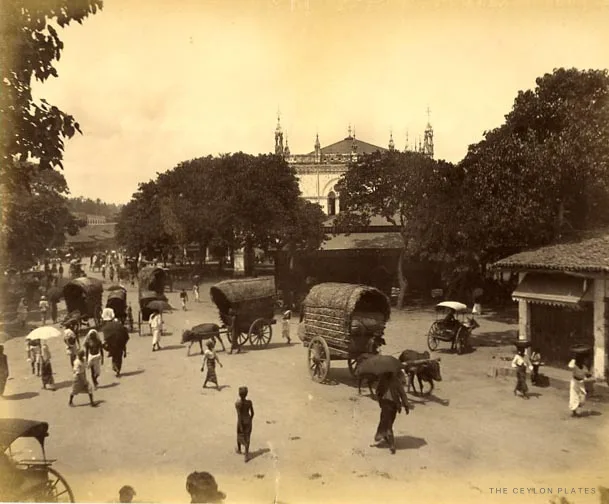
The Pettah junction, with bullock carts and the Old Town Hall.
The Pettah junction, with bullock carts and the Old Town Hall. Details
The same busy junction after tram lines had been laid, so no earlier than about 1900.
The same busy junction after tram lines had been laid, so no earlier than about 1900. Details

Next story: From coffee to tea