From coffee to tea
A leaf disease destroyed one plantation economy, and the hills were replanted with another.
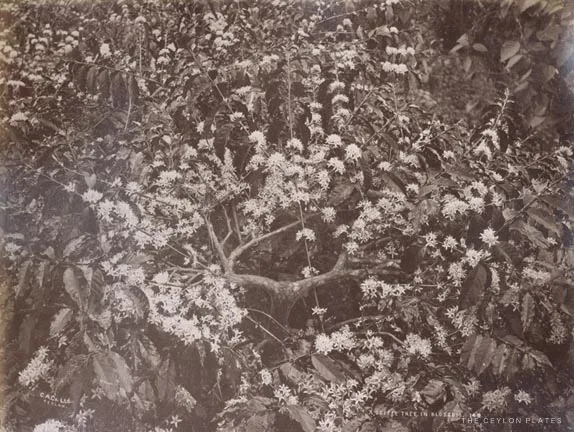
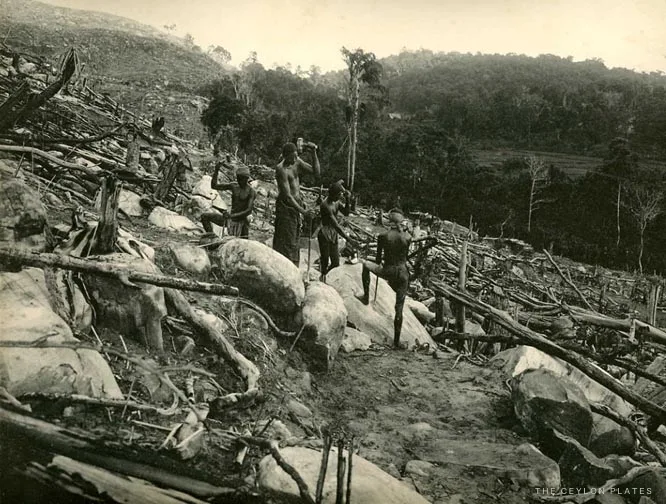
In the middle of the nineteenth century the hill country was coffee country. Forest was felled across the highlands to make way for estates, and much of the labour came from South India. Then, in 1869, a fungal disease of coffee leaves was recorded on the island. Within a few years it had reached the coffee districts, and by 1890 the great majority of the coffee acreage had been abandoned.
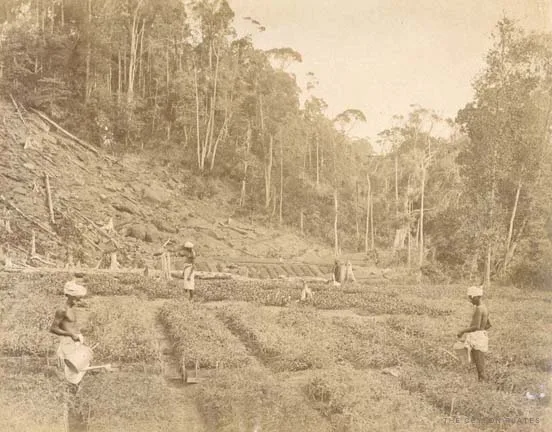
Planters turned to tea. Accounts of the early years credit James Taylor, a planter who had come to Ceylon in the 1850s, with early experiments in rolling and shipping tea in the 1870s. Over the following two decades much of the ruined coffee land was replanted, and the trade drew in newcomers such as Thomas Lipton, who bought estates on the island.
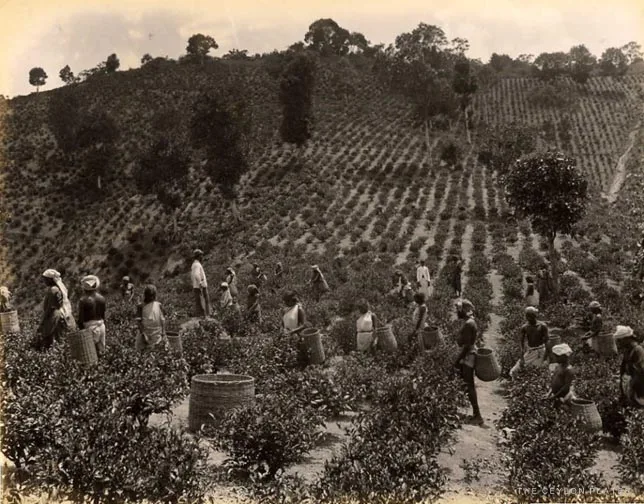
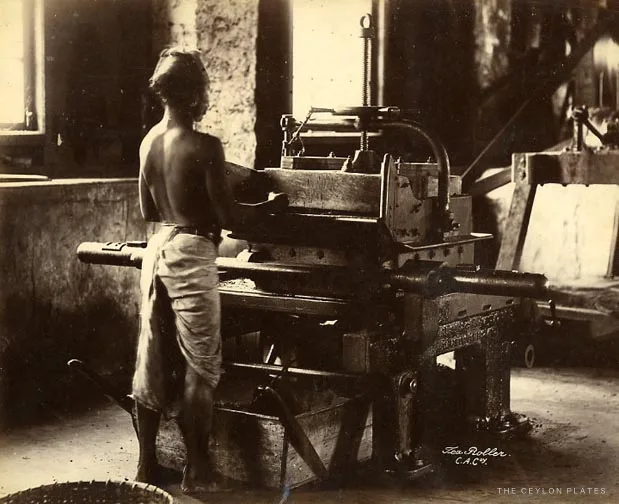
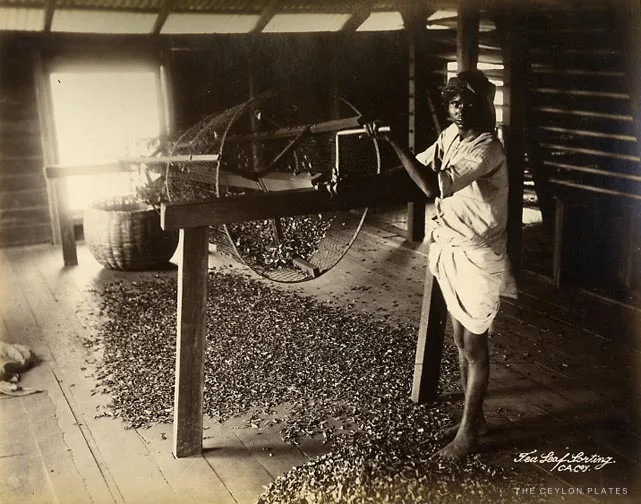
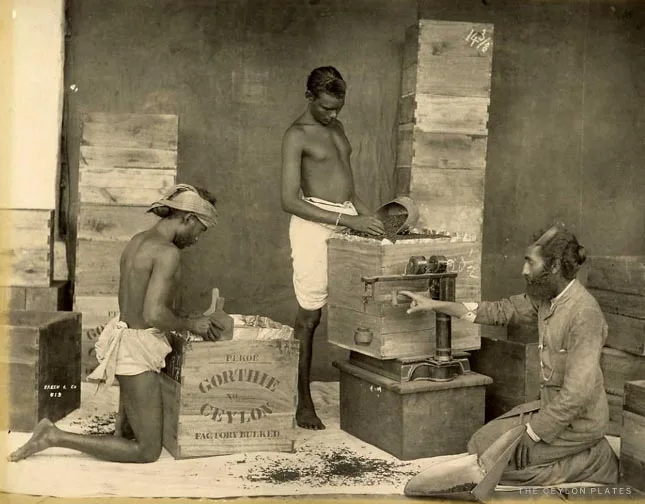
Tea needed factories as well as fields. Photographers sold sets of pictures following the leaf through each stage: withering, rolling, firing, sorting and packing. Behind these neat sequences was hard, poorly paid labour, largely by Tamil workers, whose names the captions almost never record.
Next story: The ancient cities uncovered