The ancient cities uncovered
Before the guidebooks, the great ruins lay deep in jungle. The camera caught them being rediscovered.
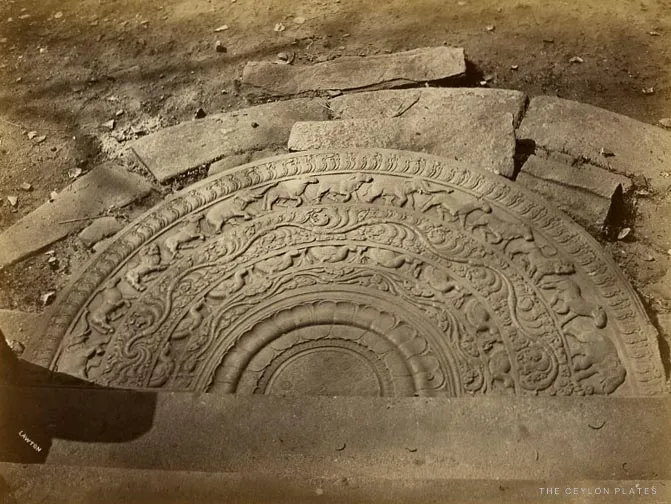
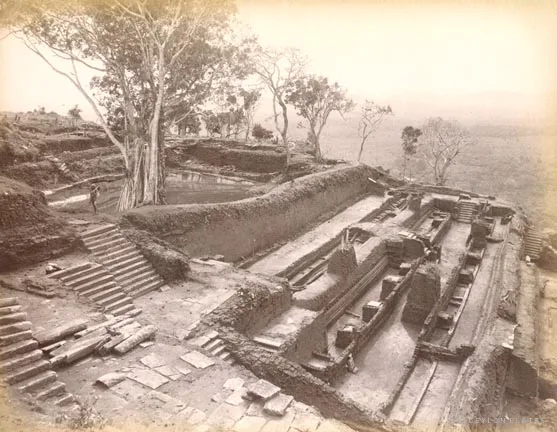
Early photographs of Anuradhapura and Polonnaruwa show something no visitor can see now: immense brick dagobas that look like wooded hills, and carved stone half-buried among roots. These pictures are a record of the sites before and during their clearing.
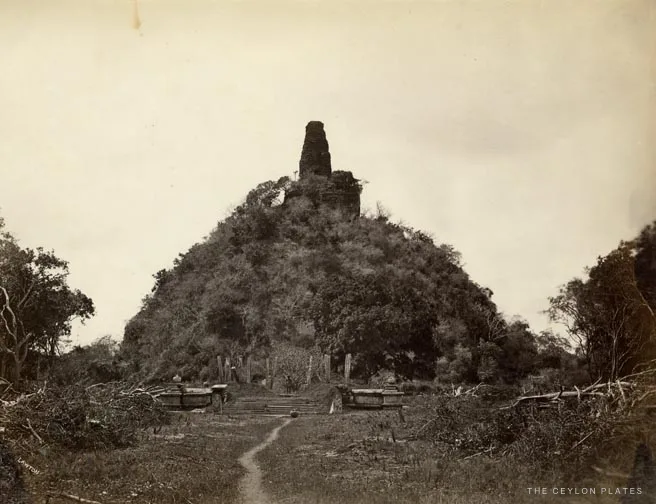
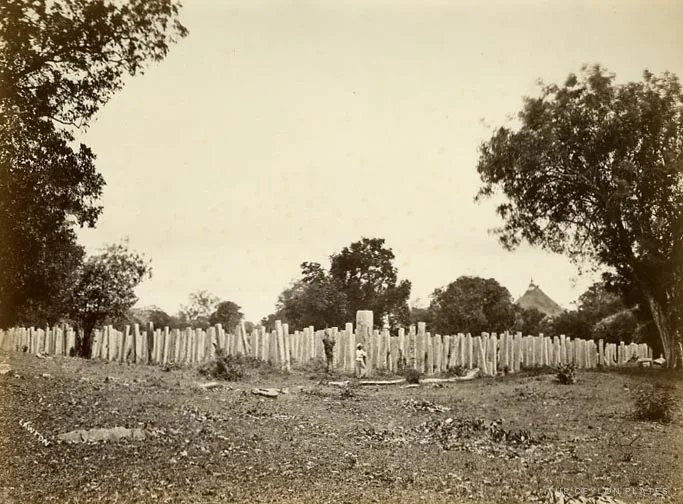
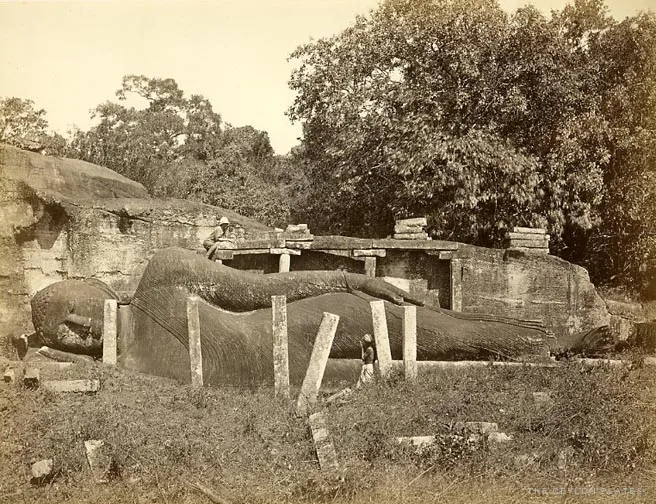
Organised archaeology began in 1890, when H. C. P. Bell of the Ceylon Civil Service was directed to start work in the North Central Province. He went on to lead the Archaeological Survey until 1912. Bell’s surveys brought excavation, measured records and systematic clearing to sites that had long been known only to local people, pilgrims and curious visitors.
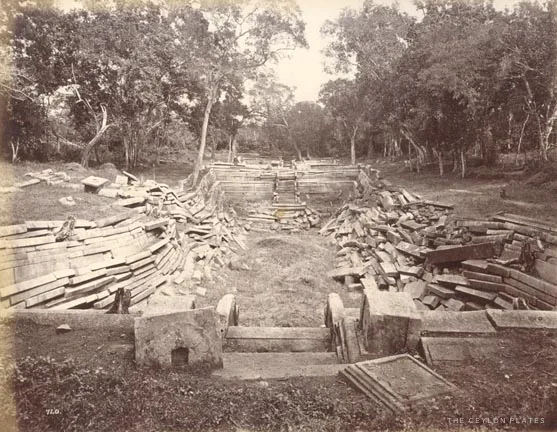
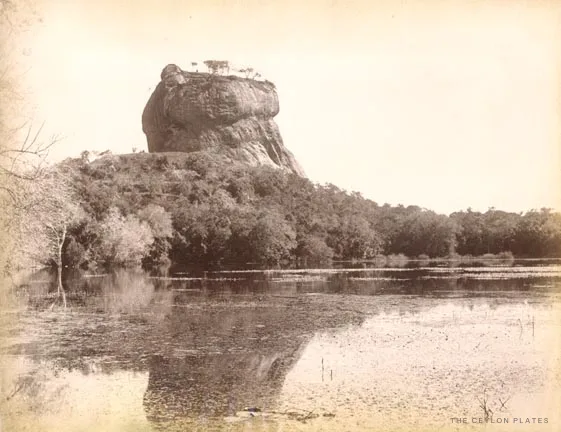
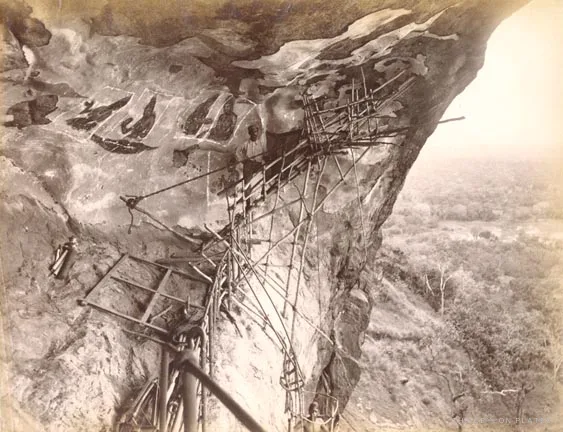
Sigiriya, the fifth-century rock fortress, was the most dramatic site of all. Bell began extensive work there in the mid-1890s. Reaching the famous painted women meant climbing precarious ladders, and copies of the frescoes were made in the 1890s under very difficult conditions.
Next story: The studios behind the pictures